Blockchain Audit Services for Crypto Platforms

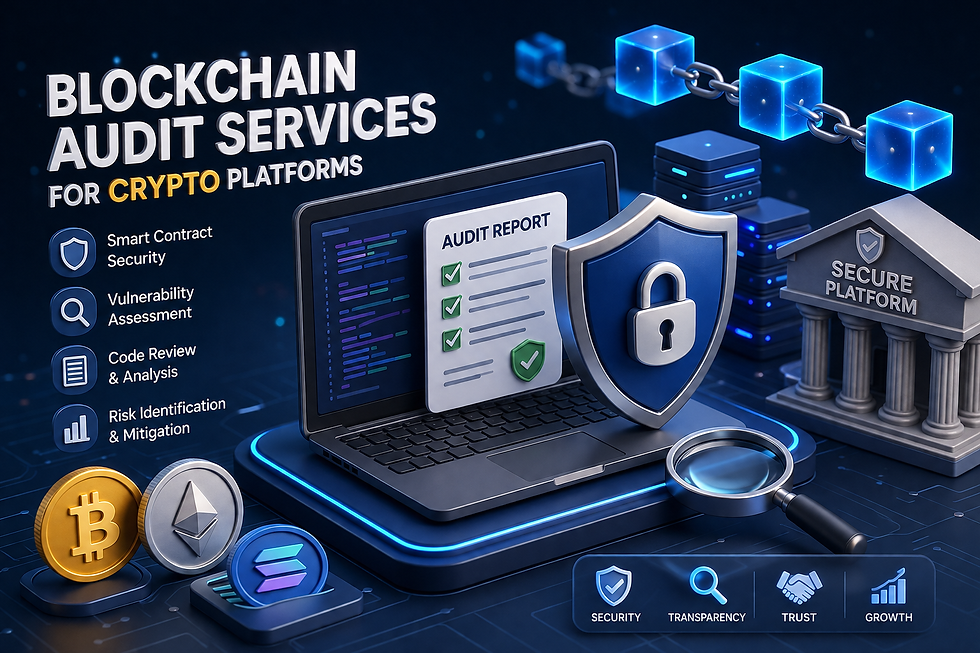
The rapid growth of cryptocurrency platforms has made blockchain security more important than ever. Whether it's a crypto exchange, decentralized finance (DeFi) protocol, NFT marketplace, or token ecosystem, protecting digital assets and user data is essential for long-term success. A single vulnerability in smart contract code can lead to financial losses, operational disruptions, and a loss of user trust.
This is where Blockchain Audit Services play a critical role. By thoroughly reviewing blockchain applications, identifying security risks, and validating code integrity, security audits help organizations launch reliable and resilient platforms. Understanding the audit process enables businesses to make informed decisions and strengthen the overall security of their blockchain infrastructure.
Why Security Audits Are Essential for Crypto Platforms
Crypto platforms operate in an environment where transactions are transparent, irreversible, and constantly exposed to potential threats. Security reviews help detect vulnerabilities before they become costly incidents.
A comprehensive blockchain audit typically focuses on:
Smart contract security
Business logic verification
Access control validation
Code quality assessment
Gas optimization
Compliance with industry best practices
An independent security review also increases confidence among investors, partners, and users by demonstrating that the platform has undergone rigorous technical evaluation.
Key Components of a Blockchain Security Assessment
A professional blockchain audit goes beyond automated scanning tools. It combines manual analysis with advanced testing techniques to evaluate every critical component.
Smart Contract Review
Auditors examine the contract logic line by line to identify coding flaws, permission issues, and execution risks. This process ensures contracts perform exactly as intended under different scenarios.
Vulnerability Detection
Security experts analyze common attack vectors such as reentrancy attacks, integer overflows, front-running risks, denial-of-service vulnerabilities, and improper authentication mechanisms.
Architecture Evaluation
The overall blockchain architecture is reviewed to ensure secure communication between smart contracts, wallets, APIs, and backend infrastructure while maintaining scalability and reliability.
Performance and Efficiency
Besides security, auditors also identify inefficient code that increases transaction costs. Optimizing contract execution helps reduce gas fees while improving performance.
How to Choose the Right Audit Provider
Selecting an experienced security partner is just as important as conducting the audit itself. Businesses should evaluate technical expertise, transparency, and proven industry experience before making a decision.
Consider these factors:
Experience with multiple blockchain networks
Strong understanding of smart contract security
Manual and automated testing methodologies
Clear and actionable audit reports
Knowledge of current blockchain threats
Transparent communication throughout the review process
A detailed audit report should explain every finding, its severity, potential impact, and practical remediation steps instead of simply listing technical issues.
Best Practices for Long-Term Blockchain Security
Security is an ongoing responsibility rather than a one-time task. As blockchain ecosystems evolve, new vulnerabilities and attack techniques continue to emerge.
Organizations can improve long-term protection by:
Following secure coding standards
Reviewing smart contracts before deployment
Monitoring blockchain activity continuously
Updating dependencies regularly
Performing security assessments after major upgrades
Educating development teams on emerging threats
Companies like Tantrija recognize that integrating security throughout the blockchain development lifecycle leads to stronger, more dependable digital products that can adapt to changing industry requirements.
Expert Buying Tips
Before choosing a blockchain security partner, keep these recommendations in mind:
Verify previous audit experience across different blockchain ecosystems.
Request sample audit reports to evaluate reporting quality.
Ensure the provider combines automated tools with manual code reviews.
Choose experts who explain vulnerabilities in clear, practical language.
Prioritize providers that offer post-audit verification after fixes are implemented.
Look for a transparent testing methodology supported by industry best practices.
These factors help organizations maximize the value of their security investment while reducing future operational risks.
Frequently Asked Questions
1. Why should crypto platforms undergo a blockchain audit?
A blockchain audit helps identify security vulnerabilities, coding errors, and logical flaws before deployment, reducing the risk of exploits and protecting digital assets.
2. What types of blockchain projects benefit from security audits?
Crypto exchanges, DeFi platforms, NFT marketplaces, token ecosystems, enterprise blockchain applications, and decentralized applications all benefit from independent security assessments.
3. Does a security audit guarantee complete protection?
No. While audits significantly improve security, continuous monitoring, regular updates, and periodic reviews are essential to maintain protection against evolving threats.
4. How long does a blockchain audit usually take?
The duration depends on project complexity, codebase size, and the number of smart contracts involved. Larger platforms generally require more extensive review and testing.
5. When should a blockchain application be audited?
Projects should complete a security audit before launch and repeat assessments whenever major upgrades, protocol changes, or new smart contract deployments occur.
Conclusion
Launching a successful crypto platform requires more than innovative features—it demands strong security practices from the very beginning. Independent security assessments help identify vulnerabilities early, improve code quality, reduce operational risks, and strengthen user confidence. Organizations that prioritize proactive security are better prepared for long-term growth in the competitive blockchain ecosystem.
For businesses seeking trusted blockchain expertise and security-focused development guidance, Tantrija offers valuable experience in building reliable, scalable, and secure blockchain solutions while supporting best practices throughout the development lifecycle.


Comments